


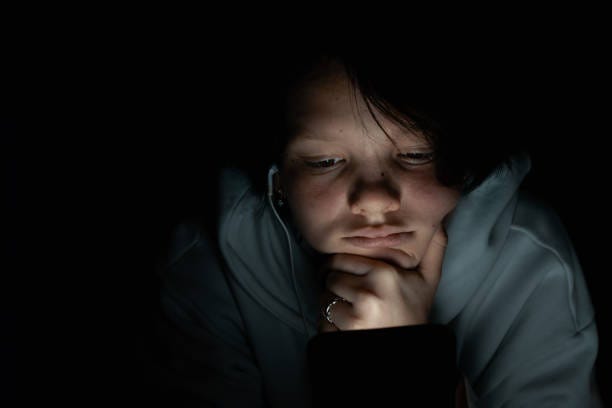
For more than a decade, parents have been told that screens are bad for their kids. Jonathan Haidt’s 2024 book The Anxious Generation argued that the “play-based childhood” was “wiped out by the arrival of the ‘phone-based childhood’ in the early 2010s.” Lawmakers have attempted to make changes in several public school systems. Florida, where I live, banned phones for the entire school day in elementary and middle schools beginning in July 2025. Los Angeles Unified banned personal phones in February 2024.
And yet the same schools keep putting screens in front of children for most of the day and sending them home for homework. Before the pandemic, the EdWeek Research Center found that about two-thirds of district leaders said they provided a device for every middle and high school student. By March 2021, 90 percent did, and 84 percent did the same for elementary students. Last December, NBC News reported that 88 percent of schools nationally provide students with personal devices.
Some researchers suggest screen time isn’t as bad as some (like me) make it out to be. What good is academic argumentation without someone trying to deny the most obvious conclusions? Candice Odgers argues that Haidt’s rewiring claim “is not supported by science” and that the studies show “a mix of no, small and mixed associations.” I grant that a laptop can be a useful educational tool. I’m no luddite. I use a computer most of my working hours. The OECD found that students who used devices for learning between one and five hours a day actually scored higher in math on the 2022 PISA exams than students who didn’t use them at all. But “some use helps” is not the same as “every child needs a personal device, all day, every day, at school and at home.”
What late light does to a young brain
Andrew Huberman has spent years explaining what light does to the human brain. I have been reading his new book, Protocols: An Operating Manual for the Human Body.
Current data indicate that teenagers in the US are in the midst of an epidemic of sleep deprivation that is likely having serious consequences for their health. Ideally, young people between the ages of six and twelve years should sleep at least nine hours per night. More than 70 percent of young people do not sleep enough, according to one large survey from the CDC. Anxiety, mood disorders, obesity, high-risk behavior, poor academic performance, and substance use have all been tied to sleep deprivation among adolescents. Good practices for teenagers include shutting off screens at least an hour before bedtime, keeping the phone (and the laptop, the tablet, etc.) out of the bedroom at night and the room cool and dark, having a consistent bedtime, and, ideally, sleeping for those eight to nine hours per night.
On his podcast, Huberman explained that “light that arrives to the eyes between 11:00 p.m. and 4:00 a.m. approximately suppresses the release of dopamine” and “can inhibit learning.” He also warned that dimming a screen doesn’t solve the problem, because the eyes become more sensitive to light as the day goes on. A fifteen-year-old girl’s brain is still developing the capacity for attention and self-control, and the hours when that brain should be asleep and consolidating what it learned are exactly the hours we have filled with bright screens.
[Kids] need sleep even more than we do, given the stage of brain and bodily development they are in…if your teen or child is depressed or anxious, it’s important to assess their sleep patterns and relationship to light, especially the amount and timing of screen use.
On his podcast episode about dopamine, Huberman described how layering a phone onto another activity, like checking messages between sets at the gym, reduces the satisfaction a person gets from the activity itself. Many teenagers now do homework with a message window open in the next tab. The homework becomes less useful, and the messages take over. This does not bode well for their attention spans or their ability to think and reason through complex ideas.
In 2023, Sweden, whose schools had gone heavily digital, began moving back to printed textbooks. The Karolinska Institute told the government that clear scientific evidence shows digital tools risk impairing students’ learning rather than improving it. Lotta Edholm, the minister for schools, said, “Physical books are important for student learning.” The same year, UNESCO’s Global Education Monitoring Report concluded that “learning benefits disappear if technology is used in excess or in the absence of a qualified teacher.”
High school makes it worse
A third-grader might use an iPad for a reading or math program during the school day. A high school junior has a learning management system for every class, essays written and submitted in Google Docs, math homework done in an online platform, research done in a browser, and deadlines set for 11:59 p.m. The homework load grows every year, and more and more of it is done on a screen, so more of it happens late at night.
Huberman gives two useful instructions: “Avoid screens in the bedroom at night. This includes phones, laptops, tablets, and TV screens.” And, “Avoid consuming information on an electronic device within an hour (at least) of bedtime. Light from phones and other screens can disrupt your circadian clock.” He notes that sleep apps and phones used as alarm clocks don’t make it any easier. He could have added the English teacher whose essay is due by midnight.
Huberman draws on a 2011 National Sleep Foundation poll of 1,508 Americans. Ninety percent said they used a screen in the hour before bed, and among those under thirty it was 96 percent. Doing homework was one of the activities they listed. The researchers “found that difficulty falling asleep rose in keeping with the amount of technology people used in the hour before bed. More passive devices like e-readers were less problematic than interactive devices like game consoles, cell phones, and laptops.” Homework is interactive. A student writing an essay is typing, checking the rubric, searching for a source, and answering the message that pops up in the corner of the screen. As Huberman puts it, “Technology, particularly interactive technology, stimulates our brains in a way that counters the calm that we need in order to fall asleep.”
In 2014, researchers at Harvard Medical School compared reading on an e-book with reading a printed book before bed. Unlike the poll, this was an experiment, so the difference came from the screen itself. According to Huberman, “people who read on an e-book at night with a dim bedside light took longer to fall asleep, were less sleepy, had lower levels of melatonin, and were less alert the next morning compared to people who read a printed book with a dim bedside light before bed.”
The American Academy of Sleep Medicine says teenagers between 13 and 18 should sleep 8 to 10 hours a night. According to the most recent CDC survey data from 2023, only 23.2 percent of high school students get enough sleep on school nights. That means more than three out of four do not.
It’s tempting to blame phones alone, and they certainly play a part. Common Sense Media tracked the phones of about 200 kids aged 11 to 17 and found that 59 percent used them on school nights between midnight and 5 a.m. That is the kind of sleep loss and screen usage Huberman ties to anxiety, mood disorders, and poor academic performance.
Student life goes beyond classes that end at 3 p.m. Sports, clubs, rehearsals, jobs, and numerous other activities are an important part of childhood development, and if students want to go to college, these activities become even more necessary. So after soccer practice runs late and dinner is at 8, a student finally sits down to write an English paper at 9:30. If his alarm goes off at 6, he needs to be asleep by 10 to get eight hours, which means he should be off every screen by 9.
In 2019, researchers published a study in the journal Sleep in which students aged 12 to 19 were asked to stop using screens after 9 p.m. on school nights. The reduction in late screen time was linked to falling asleep earlier and sleeping longer, and the extra sleep improved their alertness during the day. It is a simple intervention, but it is much harder for a family to enforce when a school puts all the homework on a computer.
The kid without a phone
Plenty of parents have wisely held off on handing their kid a smartphone. I have always found it telling that the men who built the devices and platforms now in nearly every child's pocket and backpack have applied a different standard at home. In late 2010, Steve Jobs told a New York Times reporter that his kids hadn't used the iPad and that the family limited technology at home. Bill Gates didn't give his children phones until they were 14 and kept phones off the table at meals. Peter Thiel allows his young children an hour and a half of screen time a week, the same limit Evan Spiegel set for his seven-year-old stepson. Mark Zuckerberg has said he doesn't "generally want my kids to be sitting in front of a TV or a computer for a long period of time." In 2018, Sundar Pichai said his eleven-year-old son still didn't have a phone, and Tim Cook said of his nephew, "I don't want them on a social network." The people who know these products best keep them away from their own children. And yet, when we turn to schools, it’s full steam ahead with the screens.
When the New York Times reported this spring on a middle school in McPherson, Kansas, the school had taken back the school-issued Chromebooks from 480 students in December 2025 after dealing with YouTube, games, bullying over Gmail, and harassment over Zoom. The principal said, “We just felt we couldn’t have Chromebooks be that huge distraction.” In Los Angeles, after the district banned phones, one parent told NBC News that the ban didn’t matter much, because students simply do the same things on their school devices.
When I was in school, a fight at lunch ended with a black eye, or an embarrassing moment came with a few rumors until the next juicy story. Now videos get passed around, and group chats go on until 1 a.m. Common Sense Media found that the median teenager in its study received 237 notifications a day, and about a quarter of them arrived during school hours.
Real friendships require attention. Kids have to learn how to read a face, sit through an awkward silence, apologize in person, and overlook a small offense. They can’t learn any of that if they are never fully present with anyone.
What classical schools do differently
Classical schools have grown quickly over the last decade, and many have rejected screen-based education. In 2025, Robert Pondiscio and Annika Hernandez of the American Enterprise Institute counted more than 1,500 public, private, and charter classical schools serving nearly 700,000 students. At Louisville Classical Academy in Kentucky, students in preschool through fifth grade “may not use any digital devices whatsoever, except to learn typing and for an annual standardized test administered digitally.” In every grade, “all assignments are handwritten, video is avoided, and phones and all other digital devices are put away for the duration of the school day.” If a paper is typed, the student has to turn in a handwritten draft with it. Veritas Classical Academy in Beaumont, Texas, says, “technology is an end of education, not a means of education.” Veritas utilizes Google Classroom in the upper grades, but only after years of books and handwriting.
The reason for the difference goes back to what the classical tradition thinks a school is for. The word “school” comes from the Greek scholē, which meant leisure, time set free from necessity for thinking. A classical education aims to form a student’s attention and habits, and the old authors understood that a tool shapes the person who uses it. Plato told a story about this in the Phaedrus. The Egyptian god Theuth brought his new invention, writing, to King Thamus and promised it would “make the Egyptians wiser and give them better memories.” Thamus replied, “O most ingenious Theuth, the parent or inventor of an art is not always the best judge of the utility or inutility of his own inventions to the users of them.” He warned that people who leaned on writing would “be hearers of many things and will have learned nothing; they will appear to be omniscient and will generally know nothing.” Of course, we only know about Thamus because Plato wrote the story down (my grad students like to bring this up), and classical schools assign plenty of writing. Writing turned out to be one of the great gifts to learning, but Thamus’s question still stands. What does a tool do to the person using it, and should the inventor be the one to tell us?
Aristotle taught that we acquire virtues the way we acquire any skill, by practice. “Men come to be builders, for instance, by building; harp-players, by playing on the harp: exactly so, by doing just actions we come to be just.” Practice forms bad habits as surely as good ones: “it is by playing the harp that both the good and the bad harp-players are formed.” Attention works the same way. A student who writes every essay in the space between sending text messages and making FaceTime calls practices distraction for hours a day.
Seneca praised his young friend Lucilius, writing, “The primary indication, to my thinking, of a well-ordered mind is a man’s ability to remain in one place and linger in his own company.” He warned that “everywhere means nowhere,” and that a man who spends all his time traveling “ends by having many acquaintances, but no friends.” Seneca was talking about reading too many books too quickly. Sounds a lot like a group chat.
Augustine confessed the same weakness near the end of the fourth century. A dog chasing a hare in a field, he wrote, “will distract me even from some weighty thought, and draw me after it.” He went on, “What, when sitting at home, a lizard catching flies, or a spider entangling them rushing into her nets, oft-times takes my attention?” He called this curiosity, which Scripture calls “the lust of the eyes,” and he treated it as a real temptation. If a lizard on the wall could pull Augustine away from his thoughts, what chance does a fourteen-year-old have against apps built by engineers whose job is to hold her attention?
Convenient myths
When parents question all the screens, they often hear that every child learns differently. Some students are supposedly “visual learners,” others are “auditory” or “kinesthetic,” and a device lets the teacher match the lesson to the learner. It sounds reasonable, and a great many teachers believe it. Philip Newton and Atharva Salvi reviewed 37 studies covering 15,405 educators in 18 countries and found that 89.1 percent believed in matching instruction to a student’s learning style. But the evidence isn’t there. In 2008, four cognitive psychologists reviewed the research and concluded that “at present, there is no adequate evidence base to justify incorporating learning-styles assessments into general educational practice.” Newton and Salvi point out that reviews “going back to 2004” have found “no empirical evidence that this ‘matching instruction’ improves learning, and it could potentially cause harm.” Children certainly have different strengths and interests. To teach a child who has difficulty sitting still to read a book, give them more opportunities to sit still and read a book. An iPad that delivers the content as a video is not the answer.
The other favorite line is that schools are preparing students for the future. Everything in the “real world” happens on a computer, so students need to learn on one. Interestingly, the people who build that real world don’t seem worried. In 2011, Matt Richtel of the New York Times visited a Waldorf school in Silicon Valley that kept computers out of its classrooms. One of the parents was Alan Eagle, who wrote speeches for Google’s chairman and whose daughter was in fifth grade there. “It’s supereasy,” Eagle said. “It’s like learning to use toothpaste. At Google and all these places, we make technology as brain-dead easy to use as possible. There’s no reason why kids can’t figure it out when they get older.” Skills that take years to learn are things like reading a difficult text and judging whether it is true. When fifteen-year-olds took the PISA exams in 2018, “fewer than 1 in 10 students in OECD countries was able to distinguish between fact and opinion, based on implicit cues pertaining to the content or source of the information.” Two education researchers, Paul Kirschner and Pedro De Bruyckere, reviewed the research in 2017 and concluded, “Information-savvy digital natives do not exist.” Ten years from now, which will serve a graduate better? Knowing his way around the latest software updates, or being able to read a hard book, write a clear paragraph, and pay attention for an hour?
Teenagers have a myth of their own. A sixteen-year-old told to shut down a group chat to finish his homework will quickly tell you he’s great at multitasking. In 2015, Common Sense Media found that 60 percent of teens often or sometimes text while doing homework, 51 percent watch TV, and 50 percent use social media. Nearly two-thirds said watching TV or texting while doing homework makes no difference to their ability to study and learn. Kirschner and Bruyckere explained, “Learners cannot multitask; they task switch, which negatively impacts learning.” It may seem like you can do two things at once, but the brain switches back and forth between them, and every switch costs time and attention. A student who answers a message in the middle of reading a paragraph has to go back and find their place in the text all over again, and it happens many times over the course of an evening.
Remember your responsibility
Christian parents have to face the fact that schools are not responsible for raising their children. God commanded Israel, saying, “And these words that I command you today shall be on your heart. You shall teach them diligently to your children, and shall talk of them when you sit in your house, and when you walk by the way, and when you lie down, and when you rise” (Deuteronomy 6:6-7). God placed the teaching of children with their parents in the ordinary hours of home life, including bedtime and breakfast.
God also made sleep a gift. “It is in vain that you rise up early and go late to rest, eating the bread of anxious toil; for he gives to his beloved sleep” (Psalm 127:2). The Lord who keeps Israel “will neither slumber nor sleep” (Psalm 121:4), and his creatures do. When we lie down at night, we admit that we are not God, that the world will go on without us until morning, and that we can trust the One who stays awake. A fifteen-year-old who goes to bed at 1 a.m. has learned the opposite lesson.
The psalmist resolved, “I will not set before my eyes anything that is worthless” (Psalm 101:3). Children can’t make that resolution for themselves at first, so their parents make it for them. Paul told fathers to bring their children up “in the discipline and instruction of the Lord” (Ephesians 6:4), and that discipline includes what a child looks at and when he goes to bed.
The easy answer is for schools to rethink their dependence on technology. I'm realistic, so I don't hold out much hope that it will happen soon. But schools do respond when enough families start asking questions. Some things are more important than preparing for college: our children's health, a mind that can hold a thought for more than a few minutes, the ability to read a long text and follow an argument, and a brain that has actually slept. Those are worth protecting, even if it costs a late assignment or a lower grade now and then. In the end, the student who puts the screen away and goes to sleep will be better prepared for college, and for life, than the one finishing his homework at midnight between group chat messages.
If people of our generation have been able to get a decent hold on technology and we didn’t receive it until we were adults, I don’t see why making children wait is to their detriment.
I saw you mentioned AEI. Are you familiar with Yuval Levin? I love his perspective in regards to preserving institutions