


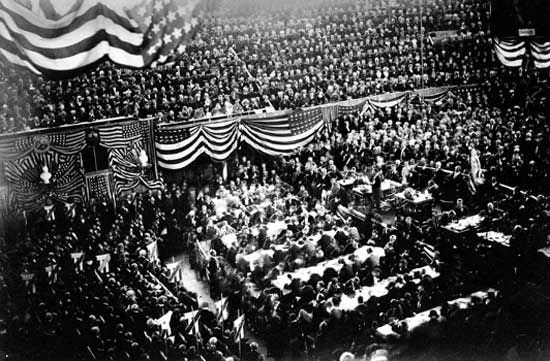
In February 2017, The Washington Post told the world, “Democracy Dies in Darkness.” The phrase had an obvious target if you know anything about American politics at the time, and it was the cousin to other well-worn phrases like “Every vote counts,” “Your voice matters,” or the particularly cringy, “This is the most important election of our lifetime.” I hope by now most people roll their eyes at this creed-like language of civic religion. I think Americans are at least smart enough to wonder, “Is any of it even true?”
James Madison and Pure Democracy
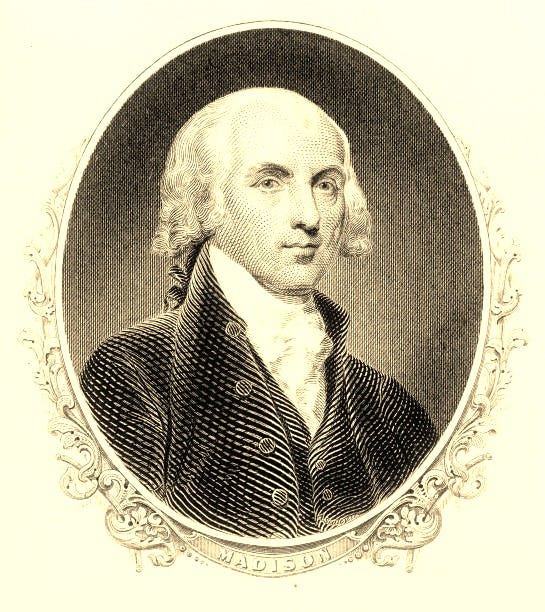
Long before the slogans, James Madison, widely hailed as the “Father of the Constitution,” highlighted the legitimate danger of a democracy. In Federalist No. 10, he wrote that pure democracies “have ever been found incompatible with personal security or the rights of property,” and that they “have in general been as short in their lives as they have been violent in their deaths.” But Madison’s thoughts were not original to him. Polybius, Thucydides, Aristotle, and Cicero had all watched free peoples govern themselves into ruin, and Madison was familiar with all of them.
Polybius, a Greek historian of the second century before Christ, described a cycle he called anacyclosis. Every simple government decays into its own corruption. Monarchy slides into tyranny. The best men overthrow the tyrant and rule as an aristocracy, which hardens into a grasping oligarchy. The people overthrow the oligarchs and rule themselves, and the democracy sinks into mob violence until a strongman promises order and takes everything. Then, take it from the top. “We promise, it will be better this time!”
Aristotle classified governments by how many rule, and whom they serve. One (monarchy), a few (aristocracy), or the many (polity) can each rule for the common good. Turned selfish, the same three become tyranny, oligarchy, and democracy. Perhaps surprising to modern people in free societies, he counted democracy among the corruptions, because it always leads to the many governing for their own appetite against the good of the whole.
Plato went even further. In the eighth book of the Republic, he traced how a democracy destroys itself. It loves freedom above everything, and freedom without limit becomes license. License dissolves authority by degrees. Fathers no longer have control over their sons. Teachers lose influence over their students. Laws become meaningless to citizens. Eventually, every claim of authority over anyone is marked as oppression. When chaos ensues, a populist will step in, promise order, and eventually become the tyrant. The excess of liberty will turn into the excess of slavery.
Cicero provided a framework the founders would borrow. He believed that a state resting on one man, a small few, or the many alone will rot. Each system has a natural inclination toward tyranny, but if the three are all braided together, each one with a responsibility to check the others, the whole might stand.
Friction Built on Purpose
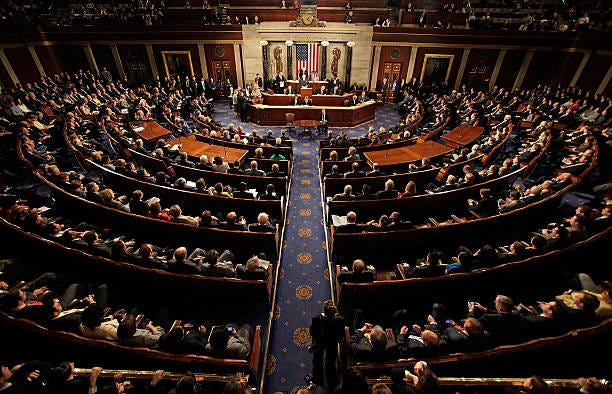
The American founders built the braid. The president would be decided by electors, not ultimately the voters. The intent was to cool popular passions and protect smaller states. The largest population centers would not be able to make decisions for the entire nation. Federal senators would answer to state legislatures. Every bill had to clear the House of Representatives and the Senate, and unelected judges could strike down laws that violated the Constitution. Power was split on purpose, scattered across states and branches so no single wave of feeling could take all of it at once. The Bill of Rights was another, even greater wall of security to protect specific rights of every citizen that could not be infringed by any branch of government. Your neighbors don’t have the right or ability to vote away your conscience, even though they will try.
America was never founded to carry out the popular will of the people. The checks and balances were designed to make the gears grind slowly through debate, deliberation, and eventual agreement. Madison wrote in Federalist No. 51, “If men were angels, no government would be necessary.” Since they are not, “ambition must be made to counteract ambition.” Today, many bemoan the fact that government is inefficient and sluggish, but the very intent of the design was friction because the founders had a keen understanding of man’s nature.
In most states, only property owners could vote. Of course, there is a discussion to be had about what that meant for women and slaves, but cultural imbalance and national sin aside, there was an important underlying principle. The founders wanted ballots in hands with a stake in the outcome, on the plain logic that a man with skin in the game will weigh a choice more heavily than a man risking nothing.
Over more than two centuries of American history, the checks and balances have slowly slipped away. The Seventeenth Amendment handed Senate seats to the electorate. It cured the genuine corruption of bought seats and deadlocked statehouses, yet it also removed the federal brake Madison built into the system. Primaries rightly pried candidate selection from party bosses and gave it to whoever shows up; most of the country remains politically asleep, so the smaller, more zealous slice decides. Property qualifications disappeared entirely, leaving candidates free to court an uninvested majority less concerned with minority protections. Meanwhile, the administrative state swelled into a fourth branch that no one elects and almost no one can dismantle. Each step arrived wrapped in the language of more democracy; step by step the country drifted toward the pure majoritarianism the entire Western tradition warned against. Some of the changes were genuine improvements. Yet the system once treated as a danger is now assumed to be both right and desirable. Pundits and politicians invoke democracy and the Constitution in the same breath without ever noticing the contradiction.
The Ones Who Want the Job
Elections do one more thing the founders foresaw. They hand power to the people who most want it, and those who most want power are the wrong people to hold it. In the Republic, Plato’s guardians had to be dragged to rule the people. They were pulled from lives they would rather have kept, which made them all the more attractive candidates for the role. At America’s founding, George Washington had to be coaxed from Mount Vernon to become president. He did not want the office, but his reluctance was his highest credential. Unfortunately, campaigns reward the opposite instincts. Rare is the modern politician who does not have an appetite for office, the stomach to beg for money, the talent for playing to the cameras, and the willingness to swallow a season of humiliation. The system selects for ambition, not quality or credentials. Can anyone look at the political class today with a straight face and say we have the best and brightest calling the shots on behalf of people they are well acquainted with? Are they fooling anyone with the “everyday American” routine in local diners, gas stations, and softball podcast interviews?
The two-party system only makes things worse. A free people is told, every cycle, that no choice could matter more. Then, exactly two hand-picked, heavily funded operatives of the machinery are put forward with the warning that a vote for anyone but this party’s man or woman is wasted, or worse, handed to the enemy. When only two candidates are considered viable possibilities, it is easier to operate as black and white. Neighbors can more easily police one another for straying. Families can now tear apart along a nicely perforated line. Everyone can easily determine the difference between the good guys and the bad guys by simply asking, “Who did you vote for?” Democracies often bemoan political division, but the division is intentional. It raises money. It creates fear. It empowers the establishment. And when the chaos kicks off in the streets, the people are too occupied to realize the difference between the two candidates was really not all that different at all. The wars still get funded, the spending never gets pulled back, the surveillance continues to grow, the debt keeps compounding. The politicians will be loud about their supposed differences, but in the back rooms and hallways they are drinking from the same cup and taking money from the same hand. It turns out “the most important election of our lifetime” was nothing more than the choice between navy blue and midnight blue, not apples and oranges. Meanwhile, those who pay attention realize they are politically homeless.
Two Idols, One Altar
The zealot and the cynic look like opposites, but the premise is the same. The zealot has made the vote a holy obligation. The ballot is his sacrament, election night his holy day, and the outcome is a verdict on the age itself. When his side wins, he is saved for a while. When it loses, he grieves like a man at a funeral, because something ultimate was on the table and it slipped away. The cynic once believed the ballot was ultimate, watched it fail him, so he decided nothing matters, and stayed home. Both of them believe the vote is the engine of governance. But when you make the ballot a savior, and it fails to deliver, hope evaporates, and the end is near.
Madison’s design and Madison’s warning can look like a contradiction. He built the machine because virtue could not be trusted, and he insisted the republic would die without virtuous citizens. Both are true, and the biblical picture of man’s nature keeps them together. Structure restrains sin. The checks were never a substitute for virtue; they are a low wall around a fallen people, built to slow the inevitable damage. The same men could say that men are no angels but still stake the whole constitutional republic experiment on a people able to rule themselves. If a Western nation wants to survive, it must stop placing the primary emphasis on national and state political offices and emphasize the far more important responsibility of every citizen to practice self-governance. A people that will not govern its own appetites gets governed by force, by someone glad to supply it.
Which city
To hang your ultimate hope on an election is to hang it on the earthly city. That does not make politics small or insignificant, but it does make the vote less than ultimate. The 1689 London Baptist Confession sets civil government in its place. God ordained the magistrate “for his own glory and the public good” (24.1), and the Christian owes him real submission and real participation. The believer is a citizen and carries a citizen’s duties. But while the office of civil magistrate should be dignified, it should not be worshipped. The church’s mission does not rise or fall with any government, and the believer’s hope rests on a city whose builder and maker is God, not on the next administration.
The prophet Jeremiah wrote to exiles inside a pagan empire. They had no vote, and they were in a land they never chose for themselves. Yet, Jeremiah spoke God’s word to them to “Seek the welfare of the city where I have sent you into exile, and pray to the LORD on its behalf, for in its welfare you will find your welfare” (Jer. 29:7). Seeking the welfare of the city includes voting, volunteering, taking an interest in public policy and the local community. What it does not do is tie your welfare to the city’s outcome. It is right and godly to seek the city’s good, while recognizing that your own good rests beyond any earthly empire in a world without elections.
Voting is a civic responsibility, somewhere in the realm of answering a jury summons. Sometimes loving your neighbors looks like voting to protect the most vulnerable or uphold true justice. What voting should not be is a forced decision against your conscience. If you cannot vote for a candidate, is it really the next best thing to vote against the other? Have you not approvingly stepped into the very apparatus that left you without a candidate you like in the first place? A Christian is free to vote, often with good reason, and is also free with a clear conscience to sit it out. If he chooses to vote, what he should know he is most free to do is skip any office or measure on his ballot when the available choices do not represent his positions.
What a Christian is not free to do is to worship politics or let it break him. A man who knows which city is his can endure the evil and corruption his government will inevitably embrace. He can work for the good of the earthly city without bowing to it or dreading its fall. He may vote because he wants to participate in the system, but he can sleep because his hope was never on the ballot.
Democracy might die in darkness, but the man who staked his salvation on a button in a booth was in the dark long before the polls closed. Madison and the men around him knew the machine could save no one. They hoped only that, with enough friction and citizens, it might hold off the worst for a while. That is all a republic was supposed to be. Democracy should die, because it was never intended to be American.
Have you checked out my History of Western Philosophy video series? It is for paid subscribers only, and each episode contains a detailed video, a deep-dive article, and a study guide. 10% of every paid subscription will go toward the Institute of Pastoral and Theological Training in Egbe, Nigeria, which I founded in 2013. It is a rural seminary serving indigent men for free, fully funded by donors like you.