


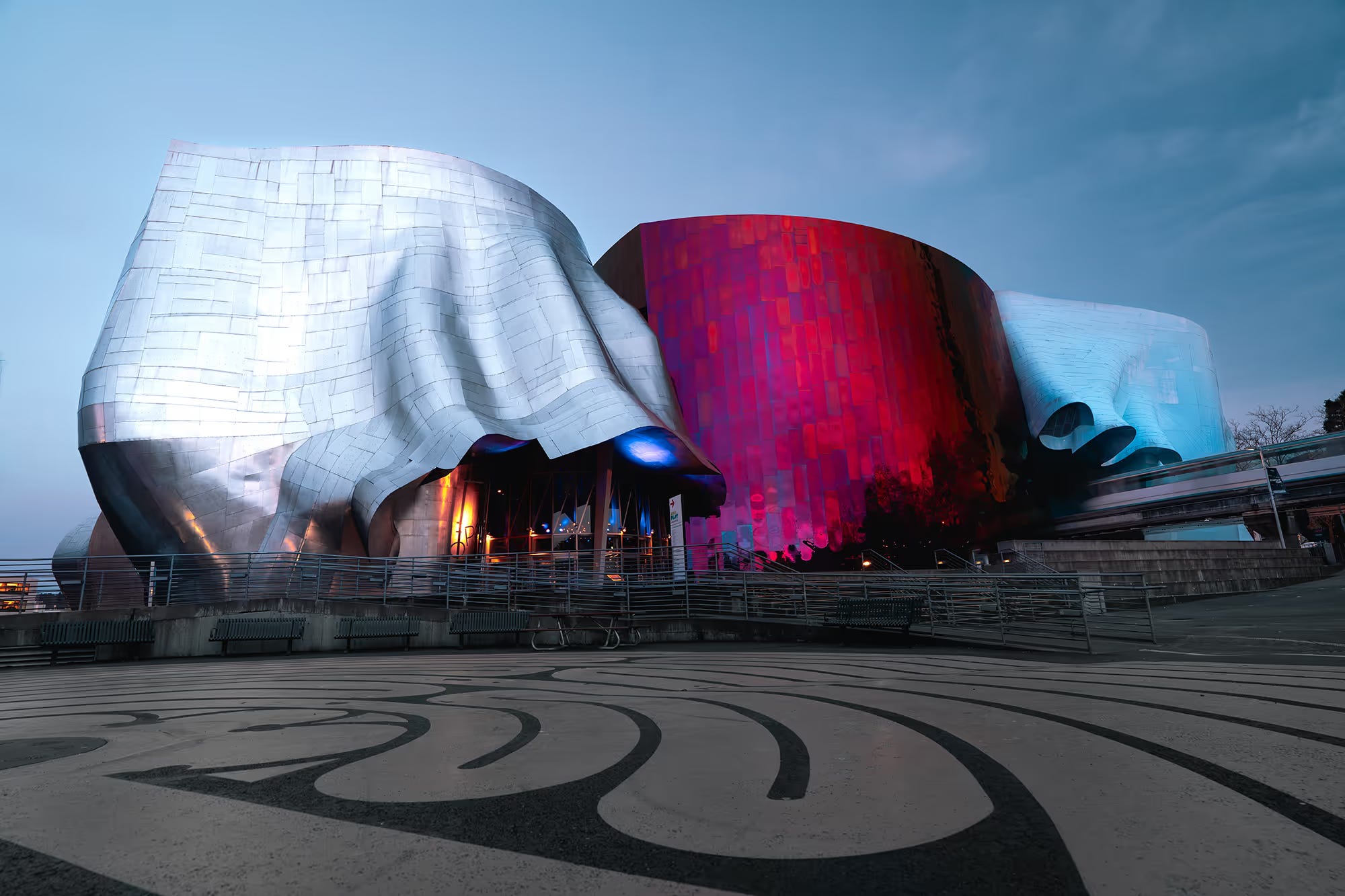
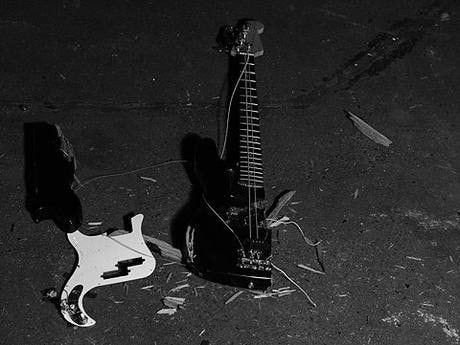
Last week, I visited The Museum of Pop Culture, which sits at the foot of the Space Needle in Seattle, Washington. It is a Frank Gehry structure of stainless steel panels and collapsing curves that the architect designed by purchasing electric guitars, cutting them to pieces, and working from the fragments. The building cost $240 million when it opened in 2000. Paul Allen, the Microsoft co-founder who commissioned it, died in 2018, worth $20.3 billion. He never married, had no children, and left the museum to the city where he was born. Inside, the collection has 80,000 artifacts: Hendrix’s guitars, Cobain’s hand-smashed Univox, Bowie’s handwritten lyrics to “Starman,” Prince’s motorcycle jacket from Purple Rain, horror film props, science fiction costumes, and a hall dedicated to the history of hip-hop, among many other things. I was there with my family for four hours. Since then, I’ve been contemplating what it means that this is what we now build.
Not a cathedral. Not a concert hall commissioned for a specific composer’s work. Not a library organized around a canon. A museum of pop culture, which is to say, a museum dedicated to preserving things that defined themselves by their refusal to last.
That is not a criticism of MoPOP, Allen, or the artifacts inside. I enjoyed the experience (aside from the incessant trigger warnings and reminders that progressive northwesterners think everything is offensive). Some of what hangs on those walls is nearly prophetic. Cobain identified a specific American sickness in 1991 with enough precision that the diagnosis still holds. Hip-hop gave voice to the experience that high culture had systematically excluded, and did it with formal inventiveness that serious critics eventually had to acknowledge. Pop culture at its best does what all serious art does: it identifies and articulates the sense of a culture before the culture has words for it. To dismiss it wholesale is to miss what it actually accomplished.
But the building is still made from the pieces of smashed instruments. And the question the building raises is not whether pop culture can be good. It can. The question is what it means that pop culture is now the only culture most people in the West share, and what that dominance has cost us.
There is a distinction, older than the argument about it, between three kinds of culture. High culture is the accumulated inheritance of a civilization’s best work, the things that survived not because they were popular but because successive generations judged them worth preserving. Folk culture is the living expression of a particular community: its songs, stories, and rituals, tied to place and belonging and transmitted person to person. Pop culture is neither. It is industrial, produced for mass consumption, optimized for immediate appeal, and designed to be replaced. It does not ask to endure. In fact, its business model depends on not enduring, because the next thing must be sold.
These three forms of culture were not always in competition. For most of Western history, they occupied different registers of the same shared world, and the relationship between them was one of the primary mechanisms by which a civilization transmitted itself across generations.
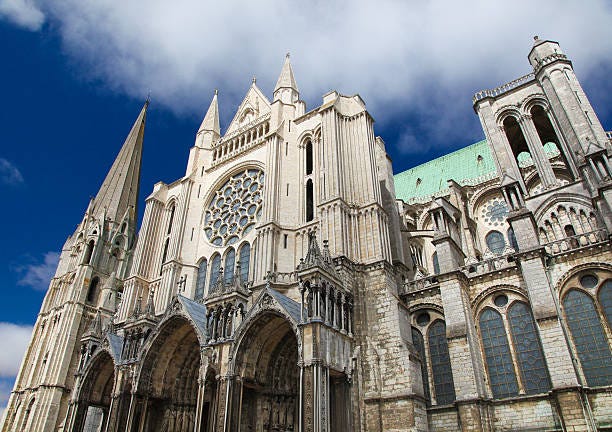
Consider the medieval parish. A laborer in thirteenth-century England could not read. He had no access to the universities at Oxford or Paris, no direct encounter with Aquinas or Augustine, no personal copy of anything. By every modern measure of cultural access, he was excluded from high culture. But the building where he worshipped every week had been designed by men who had absorbed the full theological and aesthetic inheritance of Christendom, and they had encoded it in stone, glass, and proportion. He could not have articulated what Aquinas argued about beauty, but the church building he entered every Sunday was a material expression of those arguments, and they did something to him without his knowing it.
His folk culture reinforced what the high culture embedded. The songs his community sang at planting and harvest, at weddings and funerals, carried the same cosmology to a different tune. They assumed a world with a moral order, with death as a real event and not merely a transition, with joy and grief as appropriate responses to specific things. The calendar his village kept, the feast days and fast days, organized time itself around a narrative that high culture had constructed and folk culture transmitted at the level of lived experience. He did not need to read to be formed by all of this. Formation was the ambient condition of his existence.
This is not a romanticization of the Middle Ages, which were brutal in ways the nostalgia tends to omit. The point is structural, not sentimental. High culture functioned as a set of standards that organized everything below it, including the institutions that shaped ordinary people who never directly encountered it. Folk culture functioned as the living transmission of those standards in forms that ordinary people could inhabit without formal education. The two were not identical and were often in tension, but they shared a common assumption: that some things are better than others, that the better things deserve more attention and more effort, and that the work of passing them forward is one of the primary obligations of each generation to the next.
Pop culture dissolves that structure. It does not replace high culture with something else that aspires to permanence. It replaces the aspiration itself. A culture saturated in pop stops asking whether a thing deserves to last and asks only whether it is compelling right now. The standard shifts from excellence to engagement, from judgment to preference, from “is this good” to “does this move me,” and then, one step further, to “does this move me this week,” and then to “what’s next?” The best of pop culture sometimes transcends its industrial origins and rewards repeated attention; the problem is not that nothing good can emerge from it, but that its dominant incentives and sheer volume steadily erode the habits that make such transcendence likely at scale.
This is what MoPOP, for all its genuine interest, inadvertently illustrates. The building holds artifacts from a culture that produced them with disposability in mind, and the very act of preserving them reveals the contradiction at the center of the enterprise. Allen wanted permanence for things that were never meant to be permanent. He wanted to honor a tradition that defined itself against tradition. The museum is a monument to the moment when a civilization wealthy enough to preserve anything found itself uncertain what, besides its own appetites, was worth preserving.
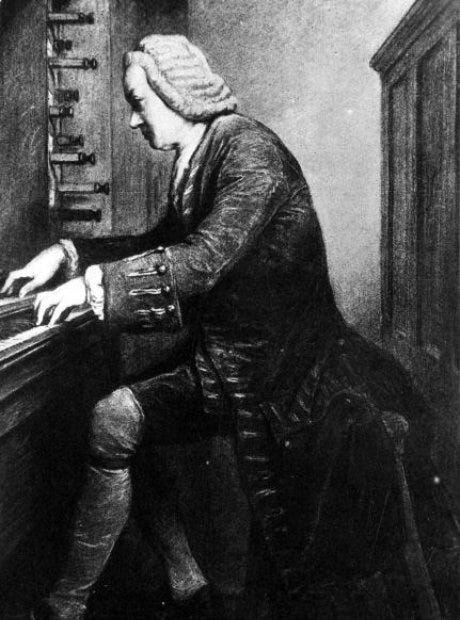
The loss is not primarily aesthetic, though it is that too. The deeper loss is the capacity for judgment that high culture requires and trains. To engage seriously with Dante or Bach or Monet is to submit yourself to standards you did not invent and cannot easily dismiss. The work makes demands. It asks you to develop the capacity to receive it, to bring patience and attention, and some degree of formed taste to the encounter. That formation takes time and requires the admission that your immediate reaction is not the final word on a thing’s value. You might not like it yet. You might need to grow into it.
Pop culture makes no such demand. It is engineered to be immediately accessible, which is one reason it dominates and one reason that dominance is corrosive. A person formed entirely by pop culture has never been asked to subordinate their immediate response to a longer judgment. They have never had the experience of being wrong about a piece of music or literature, returning to it, and finding that it was better than they first thought. They have never had to earn an aesthetic response. The result is not just shallower taste. It is a shallower personhood, a self that has been trained to treat its own momentary reactions as authoritative and to move on quickly when the reaction fades.
Aristotle argued in the Nicomachean Ethics that virtue is a habit formed by practice, that you become just by doing just acts and courageous by doing courageous acts, and that the appetites have to be trained toward the good rather than simply followed. The same logic applies to aesthetic and intellectual life. The capacity for sustained attention, for tolerating difficulty, for deferring judgment until understanding arrives, is not innate. It is cultivated, and high culture was one of the primary institutions through which the West cultivated it. Folk culture reinforced it by embedding people in communities with memories longer than their own lifetimes. Pop culture, by its structure, trains the opposite habits: immediacy, novelty, frictionless consumption, and the replacement of judgment with preference.
I am not making a nostalgic argument for returning to a world that never existed as cleanly as it sounds in summary. High culture was never democratically distributed. Its gatekeepers were often self-serving. Folk culture could be parochial and resistant to correction. The point is not that everything was better before the pop industry, but that something was present before it that is now largely absent: a shared set of standards, held and transmitted by institutions with enough truth to say that some things are better than others and that the better things deserve more of your attention than you may naturally want to give them.
The confidence to say that today, for many, is gone. Its disappearance is visible not only in what we build but in how we argue. The standard defense of any cultural artifact now is that it matters to someone, that it resonates, that it connects. These are descriptions of effect, not judgments of quality. They tell you what something does to a particular audience, not whether it is good. When effect replaces quality as the primary standard, all cultural production flattens to the same level, because everything affects someone. The result is not a more democratic culture. It is a culture without standards, which is a different and more serious problem.
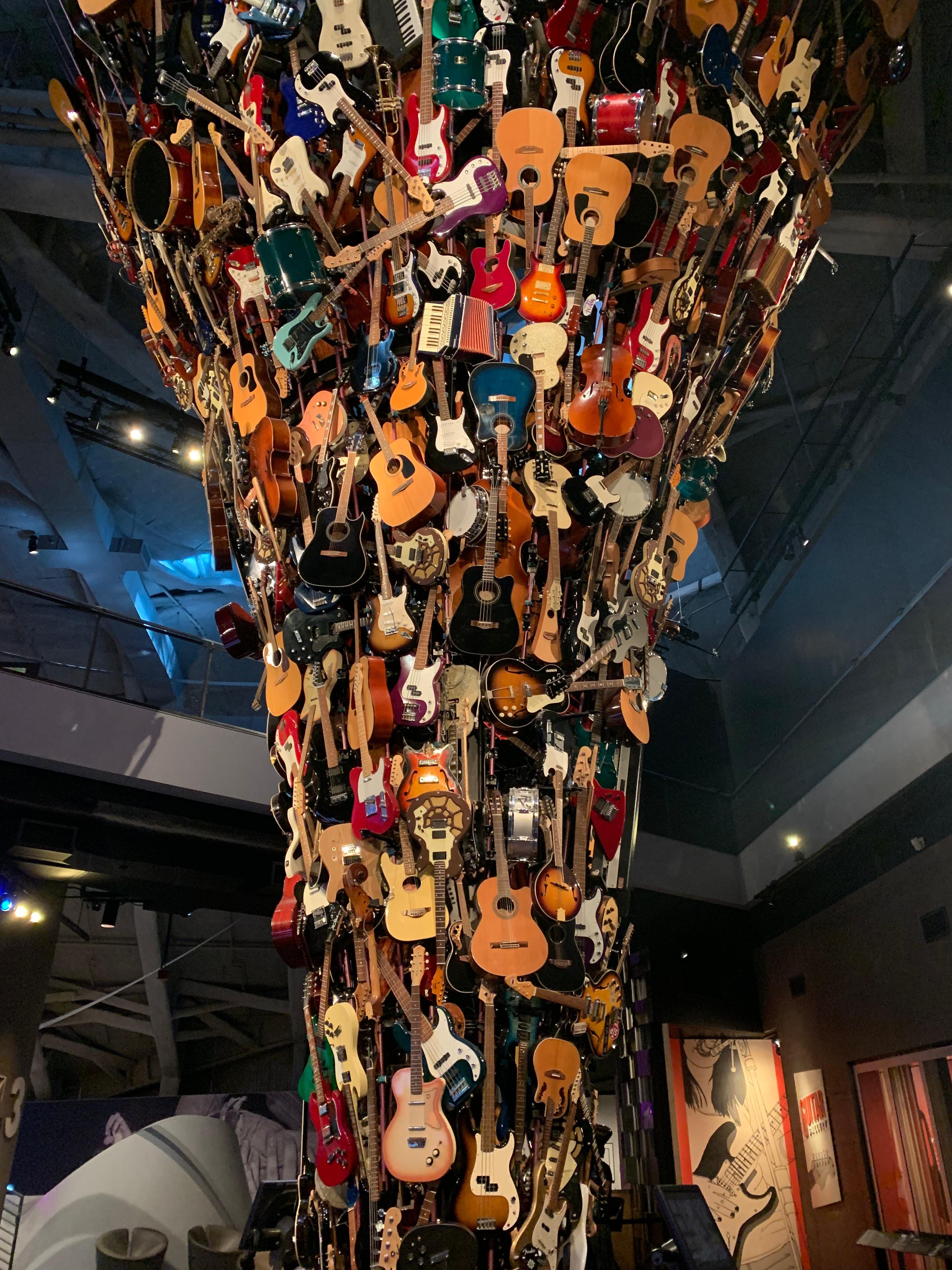
I stood in the Guitar Gallery at MoPOP for a while, looking at instruments that had been played by people who understood their craft at a level I will never reach. The gallery traces the guitar from the acoustic parlors of the 1890s through the electric innovations of the 1940s through the stadium amplifications of the 1970s. It is genuinely instructive. You can see how mastery accumulated across generations, how each player built on and departed from what came before, how the instrument itself evolved in response to what serious musicians demanded of it. That is a high cultural process. It requires the transmission of standards, the formation of taste, and the willingness to judge one approach better than another.
But it’s fascinating to think that the museum that houses the gallery does not operate by those standards. It treats Hendrix’s guitar and a horror movie prop with the same curatorial seriousness because both are pop culture artifacts, and pop culture does not rank bad, good, better, or best. It just is. Everything is interesting; nothing is more important. This is the institution’s defining contradiction, and it is also the defining contradiction of the culture that produced it.
In the book of Ecclesiastes, Qohelet surveyed everything he had built and accumulated and called it vapor. The Hebrew word is hebel, breath, mist, the thing that dissipates as soon as it appears. He was not saying that his works were worthless. He was saying that they could not answer the question his life kept asking. The pursuit of excellence under the sun, divorced from the fear of God, eventually runs into the same wall that every human project does: it cannot tell you what is worth doing, why doing it well matters, or what the work is finally for.
A civilization that has lost confidence in its capacity to judge excellence has not found a better answer to that problem. It has stopped asking the question, which is not the same thing. The vapor still dissipates. The guitar still ends up in pieces. But what is it all for?
The asking of the question is not nothing. But it requires standards to ask against, a tradition long enough to provide a measure, and the willingness to submit your own immediate reactions to a judgment that outlasts them. That willingness is what pop culture, at scale, trains out of us. Recovering it is not a matter of going back. It is a matter of deciding that some things are worth the effort of going deeper, and that a self formed by that effort is more fully human than one that never made it.
The building at the foot of the Space Needle is worth visiting. Go and look at what we’ve saved and ask what we’ve lost in the meantime. Was it worth it?
I didn't expect this to be so long and thought-provoking so I have to come back later to finish reading. This is a topic I thoroughly enjoy. A couple of thoughts:
1. When we lived in the Seattle area more than ten years ago MoPop was the Experience Music Project. We just went back about a year and a half ago and that is when I discovered the name changed. They did keep some of the same displays, especially for the grunge scene which began in Seattle, but they certainly evolved to include a lot more than they used to. It is ironic that there is a museum for pop culture since pop culture is always evolving. Will they preserve as a museum does or continually make updates and changes, I wonder?
2. Last year I read Love What Lasts by Joshua Gibbs which is in a similar vein; though your substack probably goes deeper. Old books, old architecture, old art... so much more care went into them. A man might work his whole life to construct a building that he would not see completed and yet feel like he made a valuable contribution. Now we are always busy doing things and we produce so much that none of it matters and then our lives feel empty.
Great post, Nick! Sound thoughts… even a bit reminiscent of Ken Myers’, “All Gods Children and Blue Suede Shoes.” Good read if you haven’t read it.