


Several years ago, I passed a roadside sign in Nigeria advertising a church program for women who couldn’t get pregnant. The sign was crudely painted, depicting a preacher standing with his hand on a woman’s belly while a snake came out of her mouth. The woman’s problem wasn’t that she had a physical issue with conceiving; her problem was a demon, and a visit to the program (and probably a significant sum of money) would solve her pesky situation.
I’ve driven past a lot of signs like that one. In much of Nigeria, it’s hard to go two blocks without seeing an advertisement for some church doing some new kind of nonsense. There are healing crusades and deliverance services, self-appointed apostles, people delivering “words from the Lord,” and retreats where they spend days praying on a mountain or starving themselves. And you better be speaking in tongues (not the biblical kind, of course, but the made-up gibberish that means nothing).
The empty promises in much of Nigerian “Christianity” are all the same. Bring your need, your faith, and your wallet, and the man of God delivers. Except he doesn’t. And the only thing remaining is disappointed congregants and harmful theology that makes God out to be an ATM that only delivers when you do enough on your own to make Him relent.
I love Nigeria and have spent over a decade making a very different kind of bet in a small town called Egbe. In 2010, I didn’t set out to do what we are doing now, but God’s ways are greater than ours, and I’m beyond thankful for what He has done.
Sow a Seed
The most prominent movement on Nigerian roadsides is Word of Faith and its prosperity gospel, with teaching that says God wants you healthy and rich, and that your faith (and your offering) will make it happen...if there’s enough. It’s an investment pitch. You put enough in, and God is obligated to pay you back with interest eventually. And yet, that day never comes. Prosperity pimps are some of the biggest names in Nigeria and throughout Africa, often garnering more respect and followers than athletes and Nollywood movie stars.
The pitch has paid off handsomely for the men making it. In 2011, a Forbes contributor published a list of Nigeria’s five richest pastors. He put David Oyedepo, the founder of Living Faith Church, at about $150 million, and Chris Oyakhilome of Christ Embassy at $30 to $50 million. Oyedepo owns four private jets. Meanwhile, most of the people in the pews are poor. Approximately 64% of the Nigerian population (~140 million souls) live below the international extreme-poverty line of $2.15 per day.
I am one guy, and even with the amazing team we’ve built, we can’t shut down the prosperity preachers or end Nigeria’s poverty problem. Greed, corruption, socialist governance, tribal feuds, religious clashes, and a whole host of other problems plague Africa’s most populous and richest nation. Over 250 million people live in Nigeria, and Africa has well over a billion. Who changes a continent in a lifetime?
But there are plenty of things we can do. Meaningful things for the Kingdom of God in Africa that have the potential, by God’s grace, to move the ball down the pitch toward a significant goal. What we’ve decided to do is train men. A man who learns to study his Bible carefully and preach it faithfully can stand in front of a congregation every Sunday for thirty or forty years. God’s people will hear the gospel from him. Some of their sons will become pastors, and some of the men he trains will plant churches or go out as missionaries. Paul told Timothy to entrust what he had heard “to faithful men, who will be able to teach others also” (2 Tim. 2:2). It’s slow; it requires patience and nerve, but it is God’s way.
Eight Ships
In 2010, I was pastoring Redeemer Baptist Church in Rincon, Georgia. We gave money to missions, but we had never committed ourselves to one specific work, and I was looking for a place where our church could invest for the long haul. A man invited me to see what he was doing in Nigeria, so I went. He took me to bush camps and to an orphanage. I met Fulani in their camps, traveled into remote regions to see how nomadic people live, and visited churches along the way.
It was instantly apparent to me how badly the pastors needed real training. The churches I visited had multiple choirs that sang, giving competitions, extra special treatment for pastors, and saltines and Coke for the Lord’s Supper. What they didn’t have was any real gospel preaching. Nobody was trying to engage the hearts of God’s people with sound teaching, experiential insights from the marrow of truth. If there was preaching, it was heavy on law and moralism, and significantly light on gospel.
I went back in 2011 and hosted a pastors’ conference with the help of a local minister, and about 75 men came. In 2012, I did it again, and more than 150 came, some of them from as far as twelve hours away. They were hungry, many of them saying they had never heard preaching like that before. Truth be told, I’m not Charles Spurgeon, nor do I think my preaching is anything other than explaining and applying the biblical text. But that’s how bad it has been in Nigeria. A man can stand up, read a text, explain its meaning, and apply it to the lives of the hearers, and it’s revolutionary. It was instantly clear to me that a once-a-year conference was never going to make a long-term difference. A man can’t learn to handle the Bible over a long weekend.
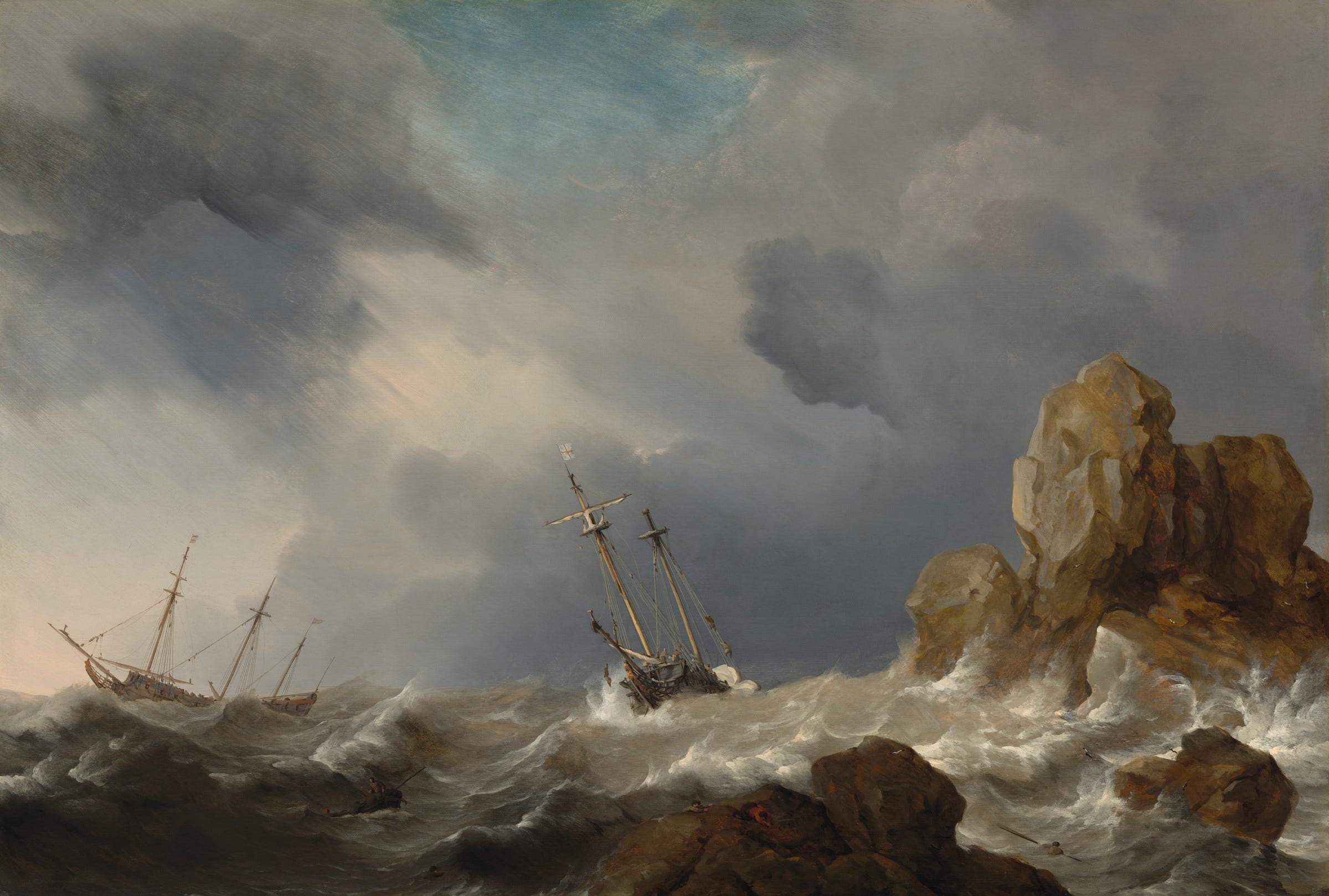
When I got home from that second conference, I preached from Ecclesiastes 11 at Redeemer Baptist Church: “Cast your bread upon the waters, for you will find it after many days” (Eccl. 11:1). Some will argue that Solomon’s point was to give generously to the poor, but the next verse points to a merchant sending his goods across the sea: “Give a portion to seven, or even to eight, for you know not what disaster may happen on earth” (Eccl. 11:2). A merchant would load his cargo onto more than one ship because there was no way to know which ship would come home. A few verses later, the Preacher writes, “In the morning sow your seed, and at evening withhold not your hand, for you do not know which will prosper, this or that, or whether both alike will be good” (Eccl. 11:6).
The prosperity preacher and Solomon both mention sowing a seed. One tells you to sow and then falsely promises a harvest. The other tells you to sow and admits he has no idea what will come back.
I told our church that Ecclesiastes is teaching something like Christian venture capitalism. A venture capitalist puts money into a lot of young companies, knowing that many will fail, because the ones that succeed make up for the rest. Kingdom work is similar, except that the return belongs to God. We can’t predict which work He will bless (He already knows), and we aren’t supposed to sit on the dock waiting for a guarantee: “He who observes the wind will not sow” (Eccl. 11:4).
I was convicted when I preached Ecclesiastes 11. So, I started planning, and the following year, the Institute of Pastoral and Theological Training (IPTT) was off the ground.
Ten Men and Some MP3 Players
When I flew to Nigeria in October 2013, I had large boxes of the first year’s worth of books and 3-ring notebooks with me for ten students. Once I made it to Egbe, I interviewed and accepted the first class of IPTT. We spent an entire week together in a classroom, where I taught twenty-four lectures on the doctrine of God. When I flew home, the men kept their books and a full set of lectures from Reformed Baptist Seminary, loaded onto solar-powered MP3 players so they could study in places where the electricity comes and goes.
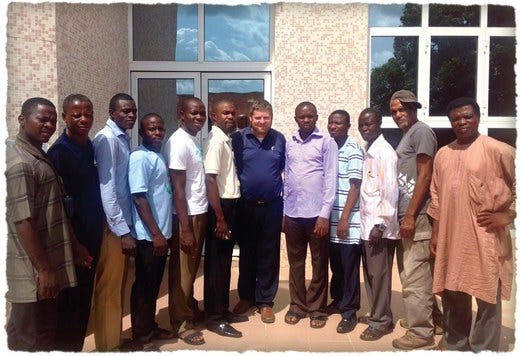
The second year, we moved everything (books and lectures) onto Kindle Fire tablets, and I taught in a rented hotel conference room. The third year, we met in a church, and three other lecturers came with me, one from the United States and two from Nigeria. In 2016, five men graduated. Our first class, and half of them made it to the end. We had a big celebration, a legitimate graduation ceremony, and many members of the community leadership in attendance, including the Elegbe--the traditional ruler of the town. That same year, we bought land for a future campus, broke ground with the Elegbe, and took in fifteen new students.
Location, Location, Location
I chose Egbe on purpose. It sits in Kogi State on the border of the predominantly Muslim Kwara State. Egbe is rural and poor. Men in Lagos or Abuja have more money and more access to theological training, but I believed our work was to be where the men didn’t have options. Egbe was the first place I ever went in Nigeria, and it is where I have been working ever since.
None of it has been easy. In Egbe, there are no quick trips to a grocery store. Necessities can sometimes be difficult to find, and the electricity is off far more than it’s on. The federal roads in and out of town are in terrible condition, and during the rainy season can become nearly impassable. The government has granted contracts to numerous companies to repair the roads over the years, and every one of those companies took the money and ran. With financial desperation settling in for many young Nigerians, bad roads have become prime real estate for bandits to kidnap and pillage travelers. The police and military try to protect the travel routes, but even some of them turn a blind eye to get a portion of the take. In 1989, the journalist Ken Saro-Wiwa wrote, “To live a day in Nigeria is to die many times” (He was hanged in 1995 for his political activism). In Nigeria, even the simplest tasks can take an entire day.
My time in the military and combat taught me to live and work in hard places, and that has served me well in Nigeria. Bush life was the hardest part of my earliest trips. I’ve slept on the ground with animals all around me, and I’ve eaten meals prepared by nomads without knowing what they were. Pray, consume, pray again.
But in addition to our academic goals, the vision was always longevity. Rural Nigeria, as difficult as it can be, made it possible to build a campus. Land was cheap, materials could be delivered in a day or two, and labor costs are far less in Egbe than in a city. Most importantly, it was close to the men we wanted to be our students.
When we broke ground in 2016, we immediately got to work on building plans. An academic building with three large classrooms, a library, and office space. We also wanted a guesthouse for traveling adjunct professors and our most senior staff. This would also give us a place to prepare our own meals and create an environment where we could relax after long weeks of teaching. The trip from America is long and uncomfortable and includes at least two international flights, a domestic flight, and a 3-hour treacherous drive, with a hotel stay in between. On top of that, newcomers are adjusting to a completely new environment and a 5- or 6-hour time change (depending on the time of year). We want them to be comfortable so they don’t decide they’re never coming back before they get there.
We quickly began to realize the enormity of the project. It would have to exist completely off the grid. We would need to provide our own water and electricity, make sure we had ample security, and then figure out how to pay for all of it. Then new questions arose. What happens if we build a beautiful campus and someone wants to build a pig farm next to us? We knew we needed more land, even if it sat empty.
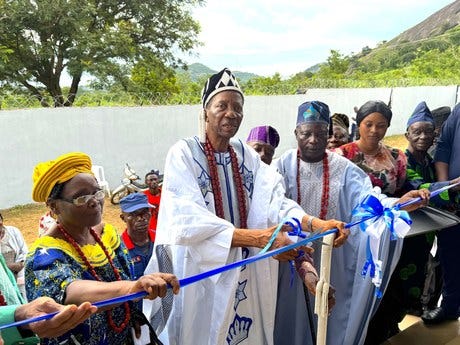
From 2016-2024, the campus was under construction. We stopped and started depending on funding because it all had to be built debt-free. From the bricks to the mattresses to the couches, Nigerian workers built everything, many of them from Egbe itself. We tripled the amount of land we owned and have started dreaming about student housing. We have spent more than $500,000 in the local economy doing all of it, funded completely by the generous giving of Christians around the world. In 2024, the Elegbe led the ribbon-cutting for the campus, and today it runs on its own solar field, a water well with a reverse osmosis system, 14 full-time staff members, and multiple adjunct faculty members from the United States and Nigeria. We have a physical library that holds more than 2,200 printed titles alongside a digital library of more than 220,000 works that we built ourselves. I don’t know of anything like it at a seminary anywhere in Africa.
We still have several things to do before we will call the infrastructure complete on the main campus (see below), but the Lord has built something out of nothing beyond anything I ever thought possible. How foolish of me to doubt the sovereign God of the universe.
Bad Odds
IPTT has trained more than 100 men so far, and only twelve have graduated with a degree. That number may seem insignificant, but the reasoning is important. Businessmen look at those numbers and say it’s a terrible return on investment, but it’s exactly what Ecclesiastes 11 looks like on a spreadsheet. You send out eight ships, and some of them sink. We take in fifteen to twenty new students every term (twice per year). Many of them find out quickly how hard it will be and leave. Some go slowly, take a leave of absence, and come back. Some students just get stuck and struggle to move forward.
The low number is our own doing. After our second class finished, we slowed down to rebuild. Olamide Falase, who was my friend for years before he was our Academic Dean, moved to Egbe and went full-time in 2020, and started rebuilding our curriculum from the ground up. Our programs now follow American seminary standards for credit hours, reading loads, and lecture length. A diploma takes three years, the BA and MA take four, and the BDiv and MDiv take six. We added courses aimed at the weaknesses we kept seeing in our students. We wrote policy manuals, standard operating procedures, and staff protocols, which was every bit as thrilling as it sounds. Because of all that, students will now graduate on a regular schedule.
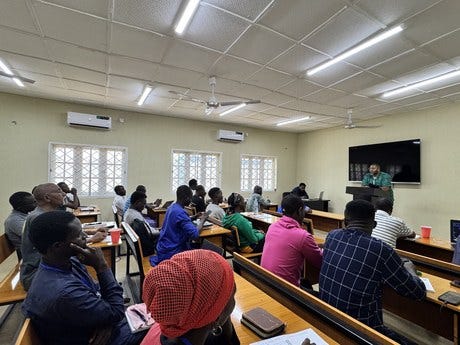
The rest of it is that we ask a lot of our students, because a congregation eventually sees how its pastor spends his time, how he treats his wife, and whether he can be trusted with someone else’s work. Our student handbook expects “mutual respect, cheerful courtesy, and a considerate regard for the comfort of others in shared spaces.” It also says, “Proper grooming, impeccable personal hygiene, tidiness, and neatness are expected of every student at all times.” Students address faculty by title and surname, and faculty address students as Mr., Mrs., or Miss. Every paper, book review, and sermon manuscript carries the same statement: “On my honor, I have neither given nor taken improper assistance in completing this assignment.” Paul told the Corinthians, whose worship had become disorderly, that “all things should be done decently and in order” (1 Cor. 14:40). A man who shows up on time, properly dressed, with his reading done, is learning the order God wants in His church. Plenty of men decide that’s more than they signed up for.
The Man Who Came to Fight
My dear friend and brother named Olumide, one of our early students, was about as Pentecostal as a man can be. He had tried to start his own church, and he had men teaching on apostleship, healing, and tongues. He told me later that after his first year with us, he planned to come back and fight me (intellectually). So he started reading our confession of faith to build his case. The Lord opened his eyes while he read it. He shut down the work he had been doing, and he went on to become IPTT’s first valedictorian.
After he graduated, Olumide was granted a visa to move to the United States. He didn’t know where to go, so he contacted me. He moved to Georgia and joined Redeemer Baptist Church, where I was pastoring when I first went to Nigeria, and the people there helped with housing, schooling, and jobs. Today he’s an elder at Redeemer, and he has started a ministry to Nigeria called Lux in Tenebris, “light in darkness.”
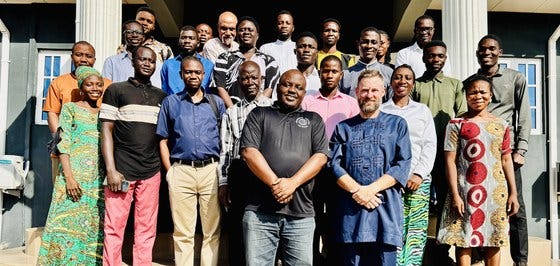
Another graduate, Olusegun Akintayo, is planting a church in Egbe right now with Olamide Falase and Dr. Anthony Fawole, our Professor of Biblical Languages. It’s called Egbe Reformed Baptist Fellowship, and it’s going very well. The men we trained are now pastoring in the same town where ten men once started with books, notebooks, and MP3 players.
Giving it All Away
A venture capitalist eventually sells his stake, but I’m trying to give mine away.
People sometimes call IPTT my school, but IPTT belongs to the Lord, and He is giving it to Nigeria. Five of the eight faculty listed on our website are Nigerian. Our Academic Dean is Nigerian. I’m handing the chairmanship of our board to a Nigerian and will stay on as a non-voting member. We’re working toward accreditation, building up faculty and leadership, and looking for ways to make IPTT self-funding while tuition stays free. When the institution is accredited and running smoothly, I’ll step back, and Lord willing, IPTT will be Nigerian-led and Nigerian-funded. Paul wrote to the Corinthians, “I planted, Apollos watered, but God gave the growth. So neither he who plants nor he who waters is anything, but only God who gives the growth” (1 Cor. 3:6-7).
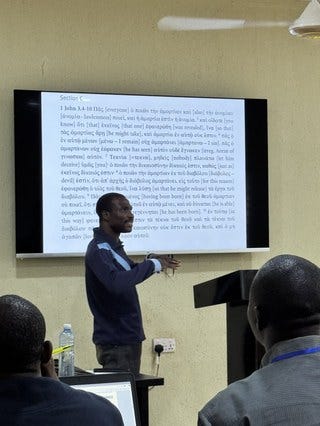
I love being a pastor, and I’m not looking for a way out of the pulpit at Emmanuel Baptist Church. But since 2010, I’ve made more than twenty trips to Nigeria and preached in eight Nigerian states. I don’t speak Yoruba, though I’ve picked up a fair amount of Pidgin. I talk with our leadership all the time, but at this point in IPTT’s life, I’m still the guy. Jesus told a parable about a manager “whom his master will set over his household, to give them their portion of food at the proper time” (Luke 12:42). He ended it with a warning: “Everyone to whom much was given, of him much will be required, and from him to whom they entrusted much, they will demand the more” (Luke 12:48). We’ve been given far more than we deserve, so I want to spend the rest of my days fulfilling what is required for God’s glory, the growth of His church, and the spiritual health of Nigeria and beyond.
How You Can Help
IPTT’s operating budget is about $90,000 per year. That runs the school and keeps tuition free for every student. Additionally, we need an additional $110,000 to finish our campus. It includes more solar panels, roof repairs, classroom upgrades, and technology for remote classes and recording. If you want more information about those projects, we’d love to share the details with you.
If you’d like to give, you can do so online through Emmanuel Baptist Church. Choose “Institute of Pastoral and Theological Training (IPTT)” from the dropdown menu. All contributions are tax-deductible, and we will provide a receipt.
To see and learn more about IPTT, you can visit our website at ipttegbe.com. We would love to hear from you. We would appreciate any support you can provide. More than anything, we would be delighted to have you pray for us. At this point, I think it’s safe to say we cast our bread upon the waters and the Lord brought some of the ships back, so we want to make the best of it.