


My oldest daughter is a senior this year, so many of our conversations involve applications, scholarship essays, and deadlines. It’s all exhausting for me, and I don’t envy her or her peers. So much of what colleges ask for is performative and unnecessary, and I hate to think of the kinds of things they’re hoping for in their next student body. For many schools, my hopes are low that it’s anything great.
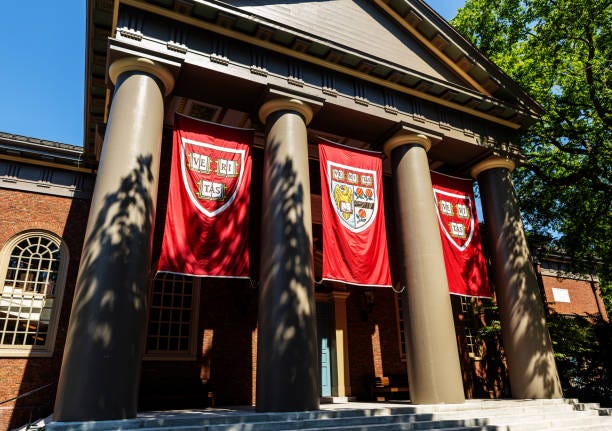
In 1643, a pamphlet printed in London called New England’s First Fruits published the rules of Harvard College. At the time, Harvard was only 7 years old. The first rule was the standard for admission: “When any Scholar is able to understand Tully, or such like classical Latin Author extempore, and make and speak true Latin in Verse and Prose, suo ut aiunt Marte; and decline perfectly the Paradigms of Nouns and Verbs in the Greek tongue: Let him then and not before be capable of admission into the College.” I don’t suppose many people in the 21st century would read that statement and even know what it means. Tully is Cicero, and teenagers were expected to read, understand, and respond to questions in Latin. I’m not sitting on a high perch casting stones. I wouldn’t have had a clue what any of that meant at 18, let alone 16.
The second rule of Harvard told the student why he was there: “Let every Student be plainly instructed, and earnestly pressed to consider well, the main end of his life and studies is, to know God and Jesus Christ which is eternal life, John 17:3, and therefore to lay Christ in the bottom, as the only foundation of all sound knowledge and Learning.” The Harvard admissions office would laugh at such a notion today.
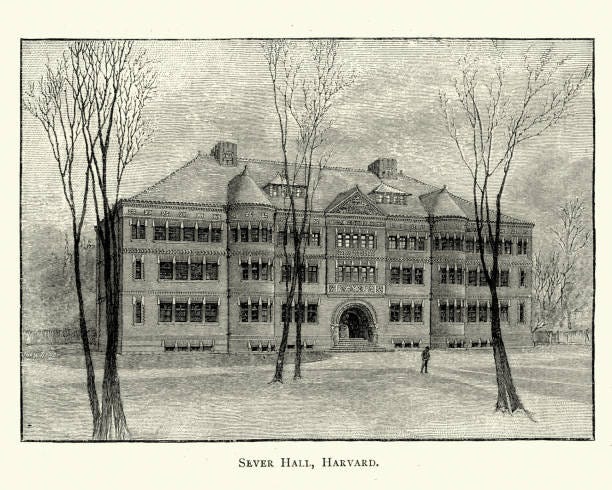
There is really no circumstance in which I would send my children to an Ivy League school. Beyond the institutional departure from their noble founding, families across the country are overpaying for undergraduate education of almost every kind. For the 2026-27 academic year, Harvard’s cost was $91,634. That’s per year, my friends…and don’t forget books. But most parents have simply gone along with the popular idea that a college degree will shape their child, give them the most helpful skills and knowledge to get ahead, and help them make something of their lives. But many colleges and universities stopped doing that a long time ago.
What the Ivies sell
In 2023, the economists Raj Chetty, David Deming, and John Friedman published a study of admissions at the “Ivy-Plus” colleges, which include the eight Ivies along with Stanford, MIT, Duke, and the University of Chicago. They found that these schools were “more than twice as likely to admit a student from a high-income family as compared to low- or middle-income families with comparable SAT/ACT scores.” The main advantages came from preferences for alumni’s children (legacy admissions), extra weight on non-academic ratings, and athletic recruitment.
Of course, most people know that the Ivy-Plus credential pays. Compared with students at highly selective flagship public universities, Ivy-Plus students were 60% more likely to earn in the top 1% and three times more likely to work at prestigious employers in medicine, research, law, and finance. If your great dream for your child is to be in the top 1% or on the partner track at a New York law firm, by all means, Harvard, Princeton, and Yale are your best bet. But if you’d rather not see them spend their most productive years hooked up to the umbilical cord of high-pressure, corporate machinery, look elsewhere. I’ve known and observed plenty of people in those “high places,” and I can’t imagine ever wanting my own children to have that experience.
One thing we must never assume is that being at an Ivy League school means students are really being challenged. Once a student is inside the system, good grades come easily. In October 2025, Harvard’s dean of undergraduate education reported that 60 percent of all grades at Harvard College were A’s, up from 24 percent in 2005. When three out of five grades are A’s, what great standard of excellence is being upheld that we’re all supposed to be impressed with?
Harvard is generous with aid, sort of. Families earning under $100,000 pay nothing, and families earning up to $200,000 pay no tuition. But this is, I suspect, why students from wealthy families are preferred; they pay full tuition, room, and board. Colleges and universities are, after all, businesses. But the price isn’t my real objection, as ridiculous as it may be. My objection is handing an eighteen-year-old over for four years to institutions built to sort and credential the next ruling class, which have abandoned the reason they were founded.
The concerns of the moment
The Ivies have replaced much of the old canon with the political concerns of the moment. In May 2016, Yale English majors circulated a petition against the Major English Poets sequence, the two-semester course on eight poets, among them Chaucer, Shakespeare, and Milton, that every English major had to take. “A year spent around a seminar table where the literary contributions of women, people of color, and queer folk are absent actively harms all students, regardless of their identity,” the petition read. Very fragile souls. Actively harms? That sounds scary. Never did I know Shakespeare was a terrorist and Milton a mass murderer. The next spring the English faculty voted to change the major, and Major English Poets is no longer required.
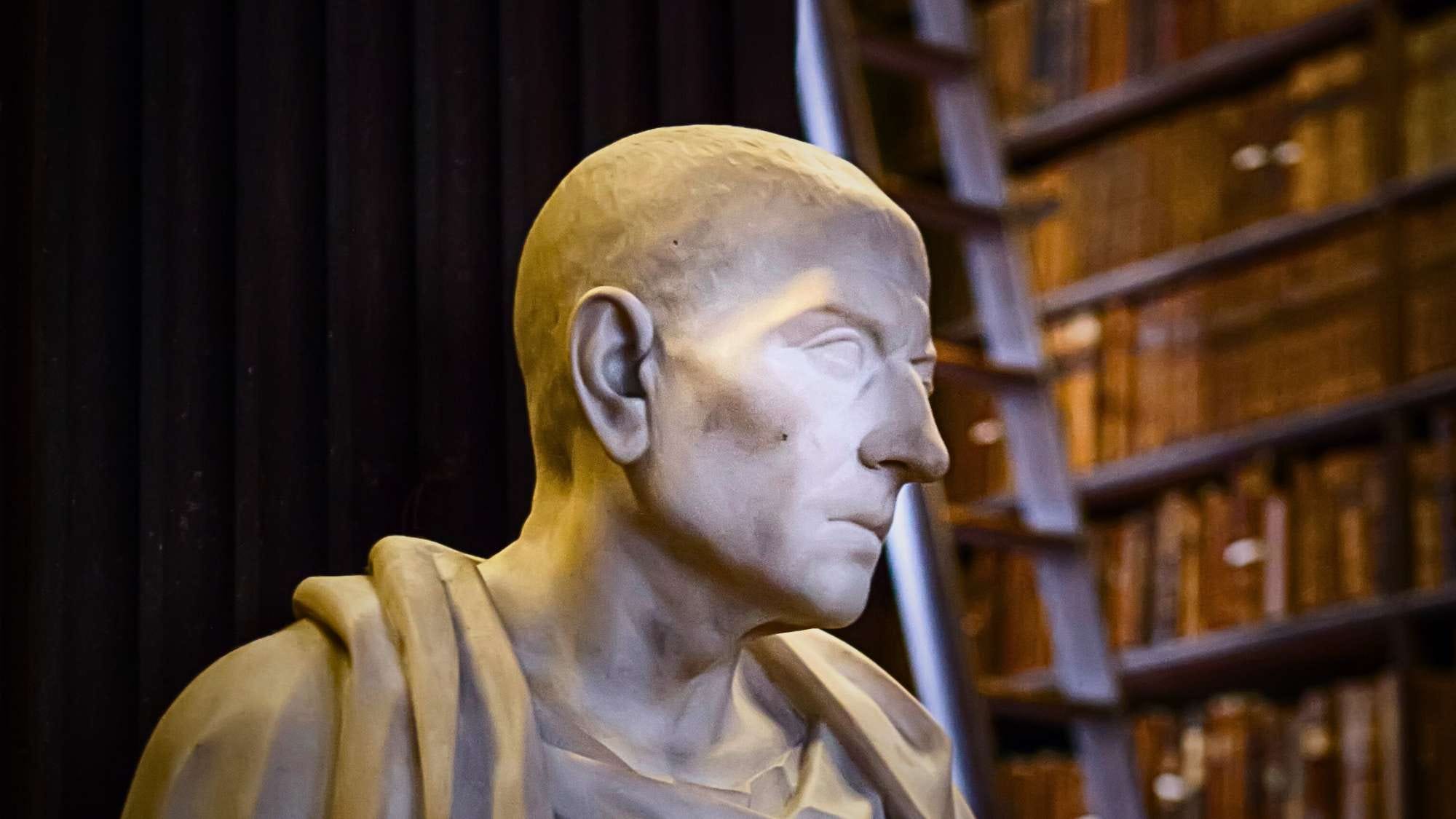
In 2021, Princeton’s classics department dropped the requirement that its majors learn Greek or Latin. Josh Billings, the director of undergraduate studies, said the discussions had started before the university president’s initiative on race, but they “were given new urgency by this and the events around race that occurred last summer.” Can’t let those original languages get in the way of some good ol’ indoctrination. A student can now graduate from Princeton with a degree in classics without reading Homer or Virgil in the languages they wrote in.
Even where the old books stay on the syllabus, the reason for reading them has changed. Harvard offered a general education course in the spring of 2026 called Tragedy Today. The catalog asks, “How can ancient Greek tragedy help us to address some of today’s most pressing sociopolitical problems?” Students read the Greek plays alongside Hadestown, which the description calls a hit Broadway show “that deals with capitalism, demagoguery, borders, and climate change,” and a modern adaptation of Oedipus that “highlights incarceration rates among Latinx communities in 21st-century America.” Huh? Have you, like, even read Oedipus, bro?
Yale lists a course cross-listed with Women’s, Gender, and Sexuality Studies that opens with the question “Was Sappho a feminist?” and proposes to study “how women’s voices have been appropriated by the literary and cultural canon of the West.” Cornell’s classics department offers Queer Classics, which reads “Homer, Sappho, Euripides, Plato, Ovid and more” through “the prism of queer studies” and asks “how classical scholarship might reproduce contemporary forms of homophobia and transphobia.” Yes, that’s exactly what Plato’s Republic is all about. I guess they’re right...no Greek or Latin is required for that one.
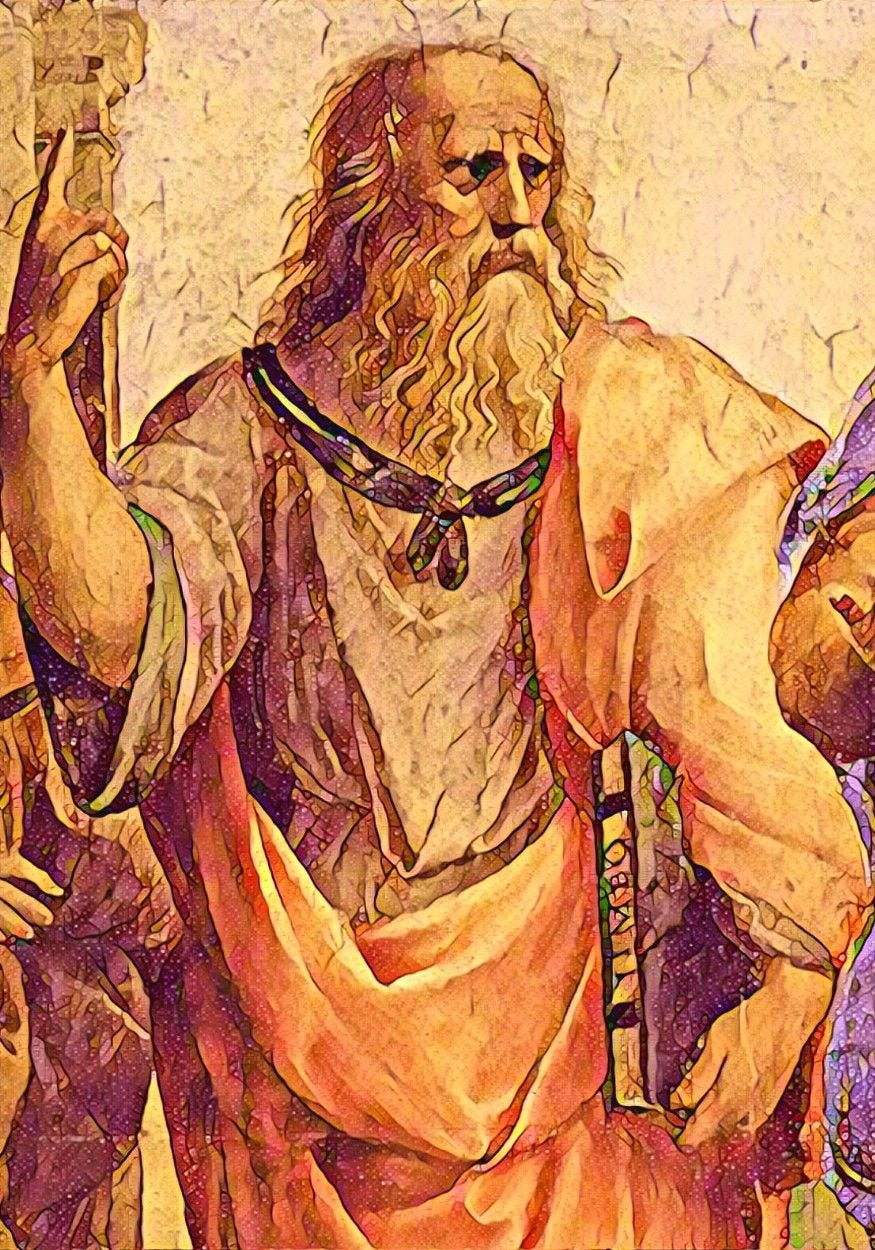
In each case, the student reads Sophocles or Plato to find out where Sophocles or Plato went wrong, measured by the absolute, can’t-possibly-be-wrong moral certainties of a twenty-year-old in 2026. Aristotle did get a great deal wrong, no doubt. I have my issues. But a course designed to catalog his errors on race, sex, and class will never ask students to consider whether Aristotle wrote something that exposes where they may be wrong. Say it ain’t so. Bravo to Harvard for still listing Gregory Nagy’s course The Ancient Greek Hero, which asks how the heroes “learn about life by facing what all of us have to face, our human condition,” but it is certainly the exception, and I’m guessing it won’t survive long.
The humanities exist to hand each generation what the previous ones learned about God and about how to live, and that includes letting Aristotle correct us. When a department decides the most important thing about Chaucer is his race and sex, or that Greek is optional for a classicist, it has put the concerns of the current year above the books that have outlasted every year before it. Fewer students choose the humanities, too. According to The Harvard Crimson, 21.1 percent of Harvard graduates in 2010-11 took degrees in the arts and humanities, and by 2019-20 it was 13.5 percent. But if I have to sit around and talk about genitalia and sexual preferences, count me out too.
Some good work still happens at these schools. Columbia, surprisingly, given its track record, has required every student in Columbia College to take Literature Humanities since 1937, and it still puts Homer, Aeschylus, and Dante in front of first-year students. But Columbia is also the first major institution in America to host the Critical Theorists of the Frankfurt School, so ya win some, ya lose some, I guess.
Christians have a particular reason to care about what lasts. “The grass withers, the flower fades, but the word of our God will stand forever” (Isaiah 40:8). The classics aren’t Scripture, but that doesn’t make them useless or unimportant. And if we really believe what the Bible teaches us, that all truth is God’s truth, even if it is plundered from the Egyptians, we shouldn’t be so quick to organize our children’s education around the things that will be forgotten in six months.
Who follows the Ivies, and who doesn’t
The Ivies set the “standard,” and many public universities have copied it. At the University of California, Berkeley, the American Cultures requirement is, in the university’s own words, “the only university-wide undergraduate graduation requirement.” One course that satisfies it is called “Decolonizing UC Berkeley,” taught by a law professor. The syllabus states that the university’s “origins story neglects the realities of its racial and colonial foundations which are rooted in the appropriation of Indigenous lands and looting of Indigenous sacred sites,” and the course aims at “decolonizing the University’s narrative history.” It is not so great an injustice that UC Berkeley is willing to give its campus back to the Native Americans, but at least they can sleep better at night knowing they did a land acknowledgment. A Berkeley student can graduate without a college course in American history, but not without being made to feel guilty that, long ago, arrowheads and pottery shards lay where the campus Starbucks now sits. Until last fall, Florida International University counted Anthropology of Race and Ethnicity, Introduction to LGBTQ+ Studies, and Sociology of Gender toward its general education core.
Florida has started to reverse this trend. A 2023 law now says that general education core courses “may not distort significant historical events or include a curriculum that teaches identity politics” or be “based on theories that systemic racism, sexism, oppression, and privilege are inherent in the institutions of the United States.” FIU’s trustees dropped those twenty-two courses from its core in September 2024, and in January 2025 the Board of Governors approved revised general education lists for all twelve state universities. I have my doubts about legislators writing curriculum (i.e., I don’t like it), and I’m not a fan of publicly funded education, but I think we’ve lost that battle. I think advocates and opponents of any given education policy handed down by the government fail to recognize that no matter what is decided, they’re dancing with the Devil. Nevertheless, at FIU, the courses that were removed are still offered as electives, and the students who take them will no longer be told that a course in Sociology of Gender is their humanities requirement.
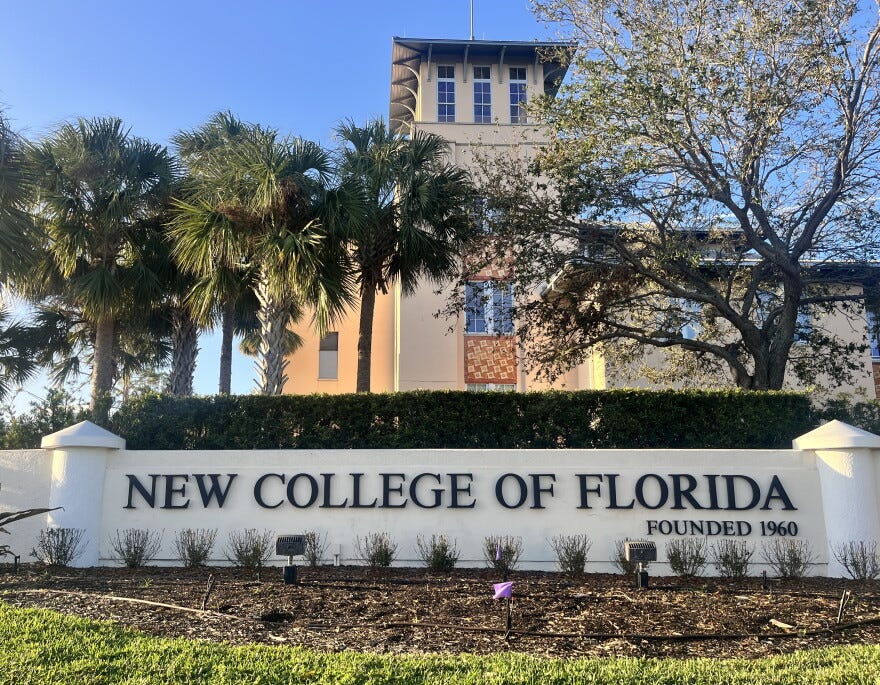
New College of Florida in Sarasota went further. In January 2023, Governor DeSantis appointed six new trustees, and that August the board voted 7-3 to end the college’s gender studies program. The college then rebuilt its core around logos and techne, or reasoned speech and applied knowledge. Every first-year student now takes a required course on the Odyssey, and every student completes coursework in literature, U.S. government or history, mathematics, science, and composition. So boring, I know, but in February 2026, the same group that grades general education requirements nationally raised New College from an F to a B+ and called it Florida’s highest-graded public school.
Hillsdale College in Michigan never had to be rebuilt. Every Hillsdale student completes the same fourteen courses. They include Great Books in the Western Tradition, Great Books in the British and American Traditions, The Western Heritage to 1600, The American Heritage, Classical Logic and Rhetoric, The U.S. Constitution, The Western Philosophical Tradition, and The Western Theological Tradition, along with biology, chemistry, physics, and mathematics. A freshman at Hillsdale reads Homer, Plato, Augustine, and Dante because the college requires it, and so does the biology major sitting next to him.
If you’re a parent helping your child choose a school, you better ask what every student there has to read. At Hillsdale and New College, the answer is a list of books. At Harvard, the answer is four courses of the student’s choosing, either about whether men can become women, or if we all just need to, like, chill, bro.
What a core curriculum used to mean
Nearly every college says it offers a liberal arts education. The Romans distinguished the artes liberales, the studies fit for a free man, from the servile arts a man learned to earn a wage. Seneca wrote to his young friend Lucilius, “I respect no study, and deem no study good, which results in money-making.” He explained that liberal studies “are so called; it is because they are studies worthy of a free-born gentleman. But there is only one really liberal study,—that which gives a man his liberty. It is the study of wisdom.” By the Middle Ages the liberal arts had settled into seven: the trivium of grammar, logic, and rhetoric (in our day, that’s roughly elementary, middle, and high school) and the quadrivium of arithmetic, geometry, music, and astronomy (college or university). They taught a student how to learn, so he could go on to law, medicine, or theology already able to read a hard text and discuss it intelligently in public.
In May 2026, the American Council of Trustees and Alumni released its annual What Will They Learn? report, which grades the general education requirements at more than 1,100 colleges and universities. Only 22.2 percent required a literature course. Just 19.4 percent required a course in U.S. government or history, 11 percent required a foreign language, and 3.1 percent required economics. And remember, these are the people called up to lead our nation as state and federal elected officials. Harvard asks its students for four general education courses, one each in “Aesthetics & Culture,” “Ethics & Civics,” “Histories, Societies, Individuals,” and “Science & Technology in Society,” chosen from an approved list. The catalog says the Ethics & Civics courses explore “questions of virtue, justice, equity, inclusion, and the greater good.” One of this fall’s options, Race in a Polarized America, asks whether the United States “is at its core a white supremacist society.” They can’t tell you much about the writings of Tolstoy or Milton, but rest assured, they’ll let you know if they think you’re a racist. By the way, Harvard, four courses chosen from a long list of options don’t make a core.
Do students at least learn to think? In Academically Adrift (2011), the sociologists Richard Arum and Josipa Roksa followed more than 2,300 undergraduates at twenty-four institutions. 45% showed no significant improvement in critical thinking, complex reasoning, or writing during their first two years of college. Tens of thousands of dollars down the drain for two years with no return on investment. Bravo.
Honest trade schools
If a college won’t teach the liberal arts, it should stop charging students for the pretense. For most students, the “core” is a year or more of scattered survey courses taken to check boxes before they get to the thing they came for. If core curriculum is actually building a firm, meaningful base to build on, then those classes matter. But if not, and largely they no longer are, just admit most colleges and universities are really just trade schools by a different name. And since that’s the case, a nursing student should just study nursing. An accounting student should just study accounting. Give them a focused program, cut a year or two off it, charge less, and call it what it is. A college that wants to keep calling itself a liberal arts college should require the old arts of every student. Families who want their children educated should look for the colleges that still do that, and stop paying liberal arts prices at the ones that don’t.
There’s nothing shameful about training for a job. I encourage young men especially to consider the trades. They are important jobs, noble work, and it’s unlikely they will be replaced by AI anytime soon. I’ve known many tradesmen who have built amazing companies and have provided very nice lives for them and their children, with plenty of time left to serve in their church and enjoy their families. Paul made tents (Acts 18:3), and God is glorified by the electrician, sanitation worker, plumber, and painter who do honest work well. Engineering, medicine, and the hard sciences require years of specialized study, and a student headed into them should get it. But most of American education is already vocational. High schools are organized around the next test, the next grade, and the college application. Colleges take the same student and add a few general education courses to what is, in practice, job training. The humanities are about generalization, or broad knowledge of many important areas of study, to cultivate wisdom and character. Most “education” today is preparing students to become good taxpayers and servants of the state.

Virtue before credentials
John Henry Newman spent years arguing for liberal education in The Idea of a University, and he still knew its limits. “Knowledge is one thing, virtue is another; good sense is not conscience, refinement is not humility, nor is largeness and justness of view faith.” He also wrote, “Liberal Education makes not the Christian, not the Catholic, but the gentleman.” A true liberal arts education can still produce a well-read scoundrel. The old arts train the mind, and that matters a great deal. But character is formed earlier, at home and in the church, and it is either strengthened or weakened by the people a student lives with for four years.
That’s why virtue has to come first in how we choose. “The fear of the LORD is the beginning of knowledge; fools despise wisdom and instruction” (Proverbs 1:7). All the treasures of wisdom and knowledge are hidden in Christ (Colossians 2:3), so a Christian family can’t treat the question of where a child studies as a matter of rankings and return on investment. When we sit down with our daughter, I want to know whether she’ll read hard books with people who take them seriously, learn to write a clear argument and defend it, and be under faithful preaching every Lord’s Day. A scholarship to a small school that still teaches the old arts is worth more to me than an acceptance letter from Harvard Yard. If we got one, I’d leave it on the curb for Saturday pickup by our wonderful, hard-working sanitation workers.